Heritage Restoration: A Complete Guide
A comprehensive look at the art and science of restoring historic buildings while preserving their character.

Pranav KadooFounder & Principal Architect
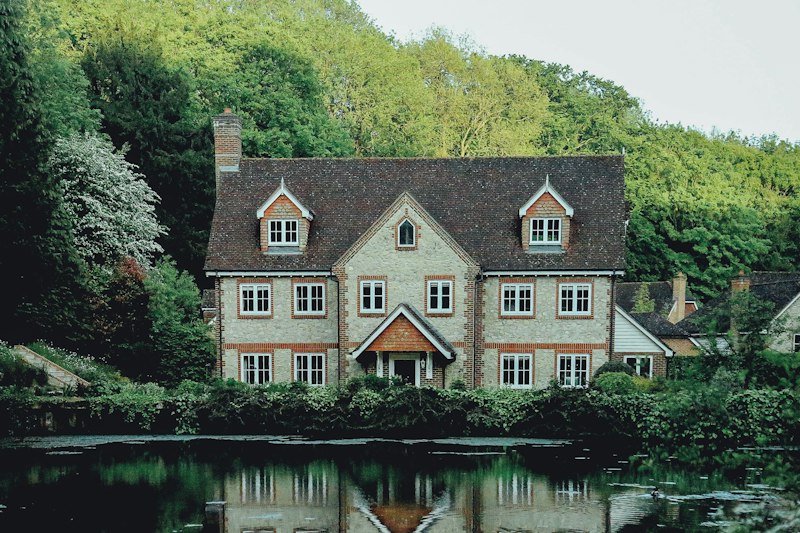
A comprehensive look at the art and science of restoring historic buildings while preserving their character.
Heritage restoration is the careful repair and conservation of historic buildings so that their original character, materials and significance survive for future generations. It differs from renovation because it follows the principle of minimum intervention, uses compatible traditional materials such as lime, and respects legal protections that govern listed buildings in India.
Conservation is the broad discipline of protecting a historic place, and restoration is one technique within it. Conservation includes maintenance, repair and protection; restoration specifically returns a building or element to a known earlier state using evidence; adaptive reuse gives a historic building a new compatible function.
Renovation, by contrast, updates a building with little concern for historic fabric. Replacing original Burma teak windows with aluminium, or covering lime plaster with cement, may be acceptable renovation in an ordinary building but would damage a heritage structure.
Nationally important monuments in India are protected under the Ancient Monuments and Archaeological Sites and Remains Act, 1958, administered by the Archaeological Survey of India (ASI). The Act restricts construction in prohibited and regulated areas around protected monuments.
Most historic buildings that people own and live in, such as bungalows, chawls, wadas and commercial buildings, are instead governed by state and municipal heritage rules. Maharashtra cities, including Nagpur, list heritage buildings and precincts under their development control regulations and grade them by significance: Grade I buildings are the most strictly protected, while Grade II and Grade III allow progressively more change. In Nagpur, proposals affecting a listed building need clearance through the Nagpur Municipal Corporation's heritage process before work starts, so check a building's listing status first.
We always recommend confirming a building's listing status and grade with the municipal corporation before planning any work, because unauthorised alterations can lead to penalties and stop-work orders.
Every successful restoration begins with understanding the building before changing it. The process we follow is:
Repair as much as necessary and as little as possible; the building should still tell its own story afterwards. – Pranav Kadoo
— Pranav Kadoo
Historic Indian masonry was built with lime mortars and plasters that are softer and more breathable than modern cement. Lime allows moisture to evaporate through the wall and flexes slightly with movement, while cement traps moisture and is harder than old brick and stone, which causes them to crack and spall.
This matters greatly in Nagpur, where extreme summer heat above 45°C followed by a heavy June-to-September monsoon puts old walls through sharp cycles of expansion, wetting and drying. Cement patch repairs on stone or brick facades often accelerate decay. We recommend lime-based mortars and plasters, and where appropriate traditional additives such as surkhi (powdered brick), for repairing historic walls.
Adaptive reuse keeps historic buildings alive by giving them a viable function. In Nagpur, Bhonsle-era wadas in Mahal and Itwari and colonial-era buildings in Civil Lines are strong candidates for new lives as homes, offices, galleries, cafes and boutique stays.
Modern services can be added sensitively. We route wiring and plumbing through existing voids or reversible surface conduits, add bathrooms in secondary spaces rather than principal rooms, and design new additions to be clearly contemporary yet sympathetic in scale and material. Fire safety and structural strengthening must follow the National Building Code of India 2016, but solutions can usually be tailored to minimise impact on historic fabric.
Owners should also plan for ongoing care. Most damage to old buildings comes from neglected maintenance: blocked rainwater pipes, cracked roof tiles, vegetation growing in masonry joints and leaking plumbing. We recommend an inspection before and after every monsoon, prompt clearing of gutters and downpipes, and a simple maintenance log. Small, regular repairs are far cheaper and far kinder to historic fabric than a major restoration every few decades.
Ready to bring your vision to life? Our team is eager to collaborate with you.
Start Your Project